HVR Energy inaugurates new hydrogen refuelling stations in Zaragoza and Algete, advancing the rollout of its network in Spain
21 September 2026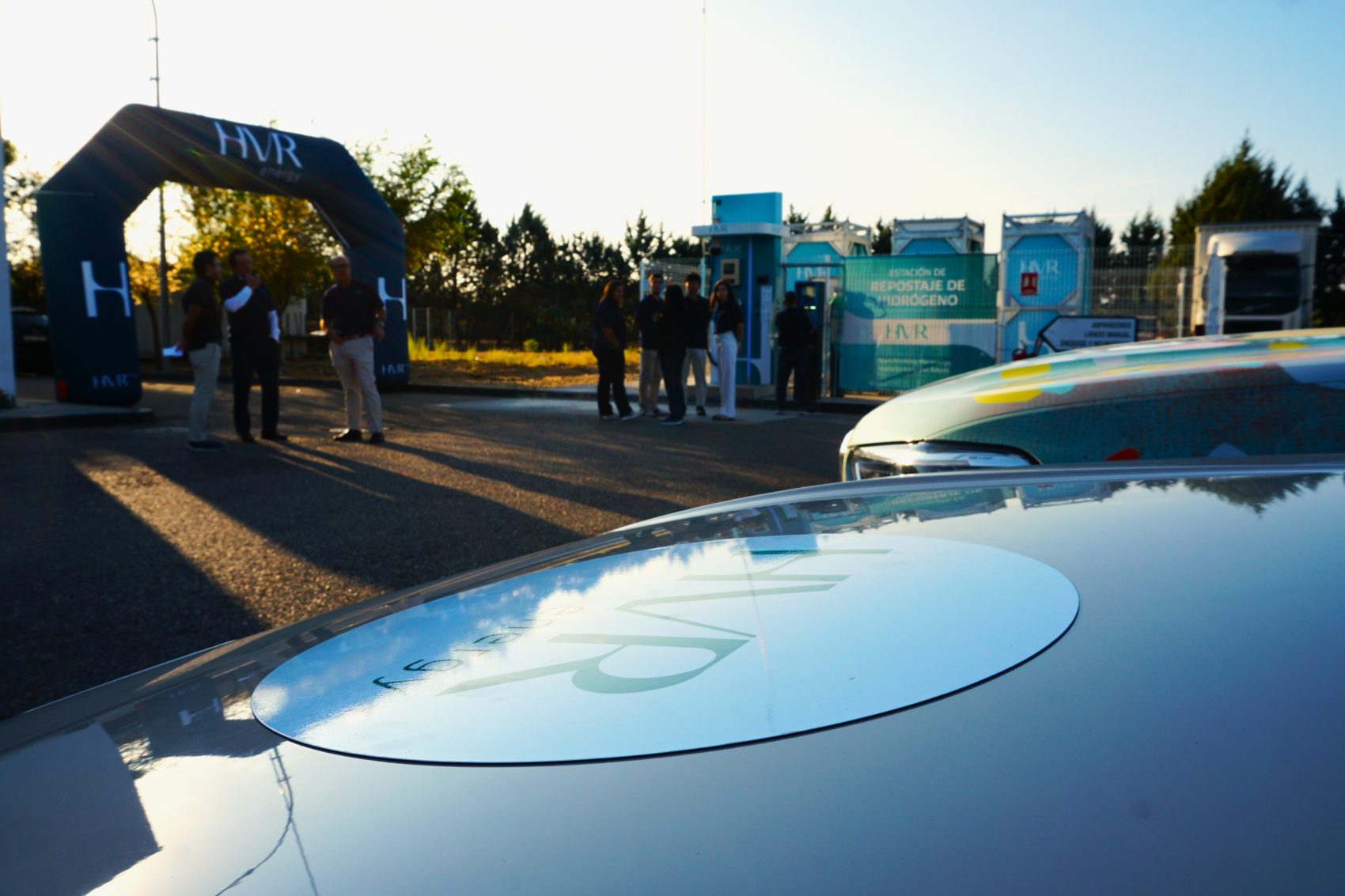
HVR Energy continúa ampliando su red de repostaje de hidrógeno con nuevas aperturas en España.
- The new INICIA stations in Zaragoza and Algete expand HVR Energy’s hydrogen refuelling infrastructure in Spain.
- The two openings demonstrate the replicability of a modular model integrated into existing service stations and designed to scale as demand grows.
HVR Energy, a Spanish company specialising in the development and operation of hydrogen refuelling infrastructure, has inaugurated two new INICIA stations in Zaragoza and Algete (Madrid), marking a further step in the progressive deployment of its hydrogen refuelling network across Spain.
Both facilities supply hydrogen at 350 bar and have been designed to integrate into existing service stations, one of the key pillars of HVR Energy’s model for expanding coverage without resorting, in the early stages of the market, to oversized infrastructure.
The openings also coincided with a particularly active week for the company. HVR Energy took part in the Gasnam Hydrogen Caravan, whose route through the Community of Madrid included stops in Algete and at HVR Energy’s facilities in Coslada, bringing together vehicles, infrastructure and different stakeholders from across the hydrogen value chain in a single day.
Two new stations to expand the refuelling network
The first opening took place in Zaragoza, adding a new hydrogen refuelling point to HVR Energy’s geographical deployment.
This was followed by the inauguration of the Algete station, integrated into Algete Fuel. From the early stages of the project, César González Bueno and his team backed the decision to incorporate hydrogen refuelling infrastructure into an existing service station.
Both openings follow the same strategy: making use of existing locations to facilitate the deployment of new refuelling points and progressively build an infrastructure network with broader geographical coverage.
Zaragoza and Algete form part of HVR Energy’s first rollout of INICIA stations, together with Córdoba and Granada, within a project supported by the Sustainable and Digital Transport Support Programme (PATSYD).
A model designed to scale with demand
HVR Energy has developed INICIA as a compact, modular refuelling solution designed for the early stages of hydrogen market development.
Its approach addresses one of the main challenges facing any new mobility infrastructure: fleets need access to refuelling points before introducing vehicles, but deploying facilities sized from the outset for future demand can significantly increase both investment requirements and associated risk.
HVR Energy’s strategy is designed to break this dynamic through infrastructure that can be deployed progressively and evolve as utilisation increases.
“These openings represent exactly the type of network we want to build: starting with infrastructure adapted to current demand, integrating it into existing locations and expanding it as the market grows. Zaragoza and Algete are not isolated projects; they are new points in a network that must enable operators, manufacturers and fleets to make decisions with increasing certainty about where they will be able to refuel,” says Santiago Ramas, CEO of HVR Energy.
INICIA supplies hydrogen at 350 bar and is designed to facilitate integration into existing service stations. HVR Energy complements this model with ACTIVA, a solution supplying hydrogen at both 350 and 700 bar, designed for locations with higher service requirements and to strengthen strategic corridors and nodes.
This allows HVR Energy to progressively adapt the characteristics of its infrastructure to the evolution of demand.
From individual stations to a hydrogen refuelling network
HVR Energy’s objective is not to develop refuelling stations in isolation, but to progressively build a connected hydrogen infrastructure network.
A single station enables refuelling at one specific location. A network provides sufficient coverage for manufacturers, operators and fleets to begin planning their operations with greater certainty regarding fuel availability.
Each new opening extends that coverage and reduces one of the main uncertainties facing companies considering the adoption of hydrogen vehicles.
For this reason, the value of Zaragoza and Algete lies not only in the individual facilities themselves, but also in their incorporation into an increasingly extensive network.
Infrastructure and vehicles advancing together
The inauguration of Algete also coincided with the Gasnam Hydrogen Caravan passing through the Community of Madrid.
During the event, different hydrogen-powered vehicles travelled between several locations linked to hydrogen production, supply and use, including HVR Energy’s facilities in Algete and Coslada.
The initiative demonstrated in real-world conditions one of the fundamental requirements for market development: vehicles and infrastructure must evolve in a coordinated manner.
Without sufficient refuelling points, it becomes more difficult for manufacturers, transport companies and operators to introduce new vehicles. At the same time, growth in the vehicle fleet allows station utilisation to increase progressively.
Infrastructure therefore needs to be deployed early enough to support the development of demand, while remaining scalable and appropriate to the current stage of the market.
A network that must be ready for 2030
This deployment also takes place within a European framework that requires further development of alternative fuels infrastructure. AFIR establishes a minimum network of publicly accessible hydrogen refuelling stations along the TEN-T core network and in major urban nodes by 2030, reinforcing the need to build sufficient coverage before the end of the decade.
For HVR Energy, this regulatory context supports an essentially operational requirement: ensuring that refuelling stations are available as manufacturers, operators and fleets begin to increase their adoption of hydrogen-powered vehicles.
Zaragoza and Algete represent two further steps in that direction.
Two new stations.
Two new points on the map.
And one shared strategy: ensuring that each new opening increases the value of the infrastructure already deployed, progressively transforming a collection of hydrogen refuelling stations into a connected, scalable hydrogen refuelling network designed to grow with the market.
You may also be interested in

HVR Energy secures an additional €12.75 million in financing from the ICO to deploy 30 hydrogen refuelling stations across Spain
Read more
HVR Energy achieves a major milestone in the deployment of hydrogen refuelling stations across Spain through the INICIA project
Read more
HVR Energy and CEEES sign a strategic agreement to accelerate the deployment of hydrogen refuelling stations across Spain
Read more